

Precision Corneal Mapping
What is Corneal Mapping?
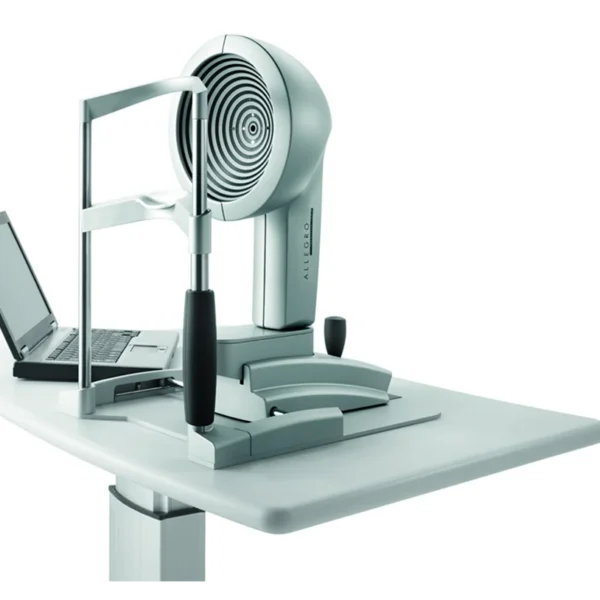
Corneal mapping is a quick, painless, non-contact test that creates a highly detailed map of the surface of your eye. It measures the unique shape and curvature of your cornea, which is the clear front part of the eye responsible for focusing light. At Campbell Cunningham Laser Center, we use the Topolyzer VARIO®, an advanced corneal mapping device that captures thousands of precise measurements, allowing us to detect even the smallest irregularities. This detailed information helps your LASIK surgeon better understand your vision and customize for greater accuracy, safety and visual outcomes.
Benefits for LASIK and Other Eye Care Procedures
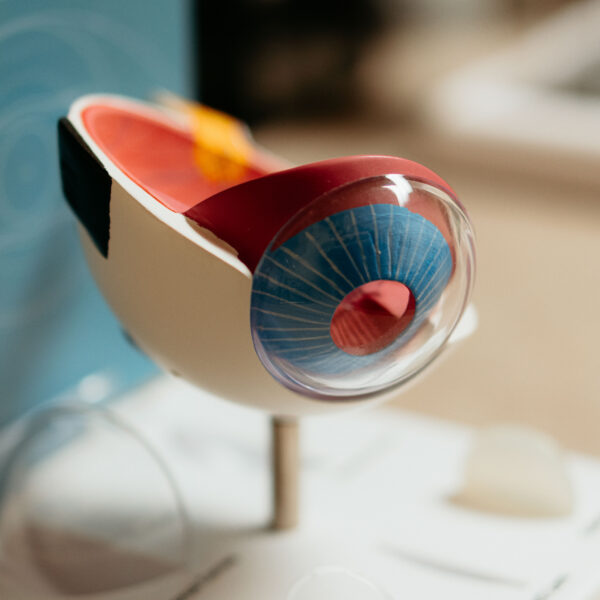
The cornea is actually not a naturally smooth surface. It has microscopic peaks and valleys that are unique to each eye. Your cornea is directly responsible for how light enters the eye, so those tiny irregularities play a big role in the way you see. Using the advanced Topolyzer VARIO® diagnostic system, your surgeon can create a highly detailed map of your cornea using up to 22,000 unique points. These precise measurements make Contoura® LASIK possible – a topography-guided, FDA-approved laser vision correction procedure that customizes treatment to the exact shape and surface of your eye. Unlike traditional LASIK, Contoura® LASIK can also address subtle corneal irregularities that may contribute to glare, halos, starbursts and night vision difficulties, helping patients achieve sharper, clearer vision with exceptional precision. We are proud to be the only practice in Knoxville offering this advanced technology.
Part of the WaveLight® Refractive Suite by Alcon
The Topolyzer VARIO® is part of the WaveLight® Refractive Suite by Alcon, a group of advanced laser technologies designed to improve the accuracy of LASIK. It works together with the WaveLight EX500 Excimer Laser and FS200 Femtosecond Laser to create a more customized treatment based on the unique shape of your eye. Studies show that this technology helps many patients achieve excellent vision, with most reaching 20/20 or better, and 98% saying they would choose the procedure again. By using detailed corneal measurements from the Topolyzer VARIO®, in addition to the 3D map of your eye with Contoura, the WaveLight Refractive Suite helps deliver clearer vision and improved visual comfort compared to standard LASIK methods.
Why choose Campbell Cunningham Laser Center for LASIK in Knoxville, TN?
Your local, board-certified, ophthalmologists Jake McMillin and Eric Sollenberger, believe in using the most advanced laser technology available. Your experienced surgeons are fellowship-trained and part of a laser center with more than 20,000 successful procedures performed and counting. Rest assured, your local Campbell Cunningham Laser Center surgeons are the most experienced hands for your clear vision procedure like LASIK.
Corneal Mapping FAQs
What should I expect during my corneal mapping?
Corneal mapping is a quick, simple and painless test that creates a map of your cornea. During the exam, you’ll sit comfortably and place your chin and forehead on the imaging device while looking at a small light. The machine uses gentle light patterns to create a detailed map of your eye. There is no pain, no eye drops and no recovery time needed. Each eye takes only a few seconds to scan, and the test is usually finished in just a few minutes.
Corneal Mapping vs Standard Eye Exams
Corneal mapping provides information about shapes, curvatures and irregularities of the cornea that could affect the outcome of LASIK. By contrast, a standard eye exam typically only measures your overall prescription, leaving out the vital details on how the cornea is shaped as LASIK works by reshaping the cornea.
What do LASIK outcomes look like with corneal mapping?
LASIK with the WaveLight Refractive Suite (which includes the Topolyzer VARIO®) outperformed glasses and contacts in over 30% of eyes in a study and improved many common symptoms associated with previous LASIK technology. WaveLight offers exceptional visual acuity in many cases, with 89% of patients achieving 20/15 and 100% achieving 20/20.